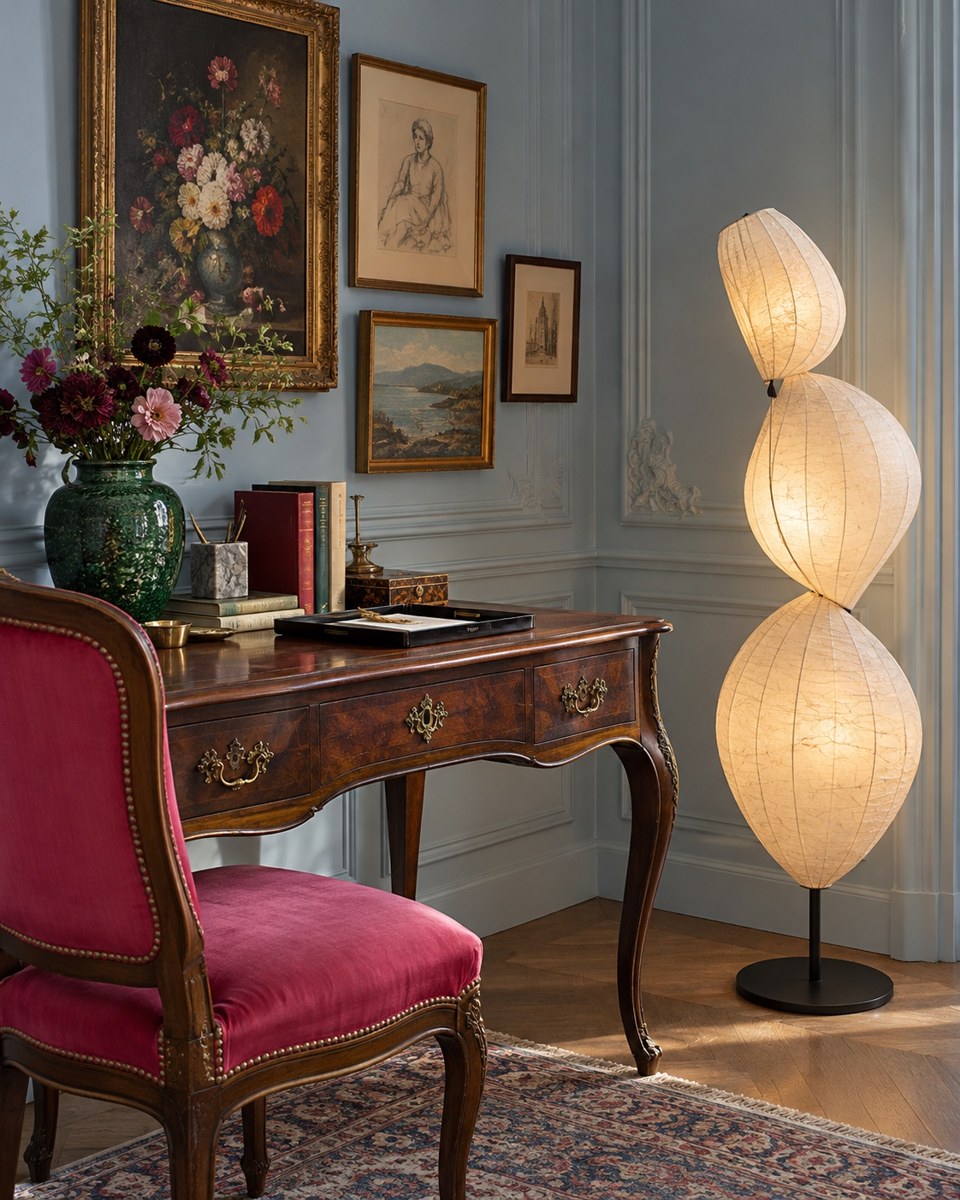
A blank corner can feel hard to start. Do you choose the desk first? The art? Or the lamp?
This room offers a simple order. Start with the background. Add the main furniture. Then bring in art, soft light, and a few personal objects.
The look mixes European antique style with Japanese-inspired paper lighting. Blue walls keep it calm. Raspberry velvet gives it color.
These are AI-generated interior concepts. The stages show a styling plan, not a real renovation. Furniture shapes and materials are visual references, not verified products for sale.
A Small Field Guide to the Room
Before we build the room, meet its main pieces. The numbers below match the image. Some small objects share one group.
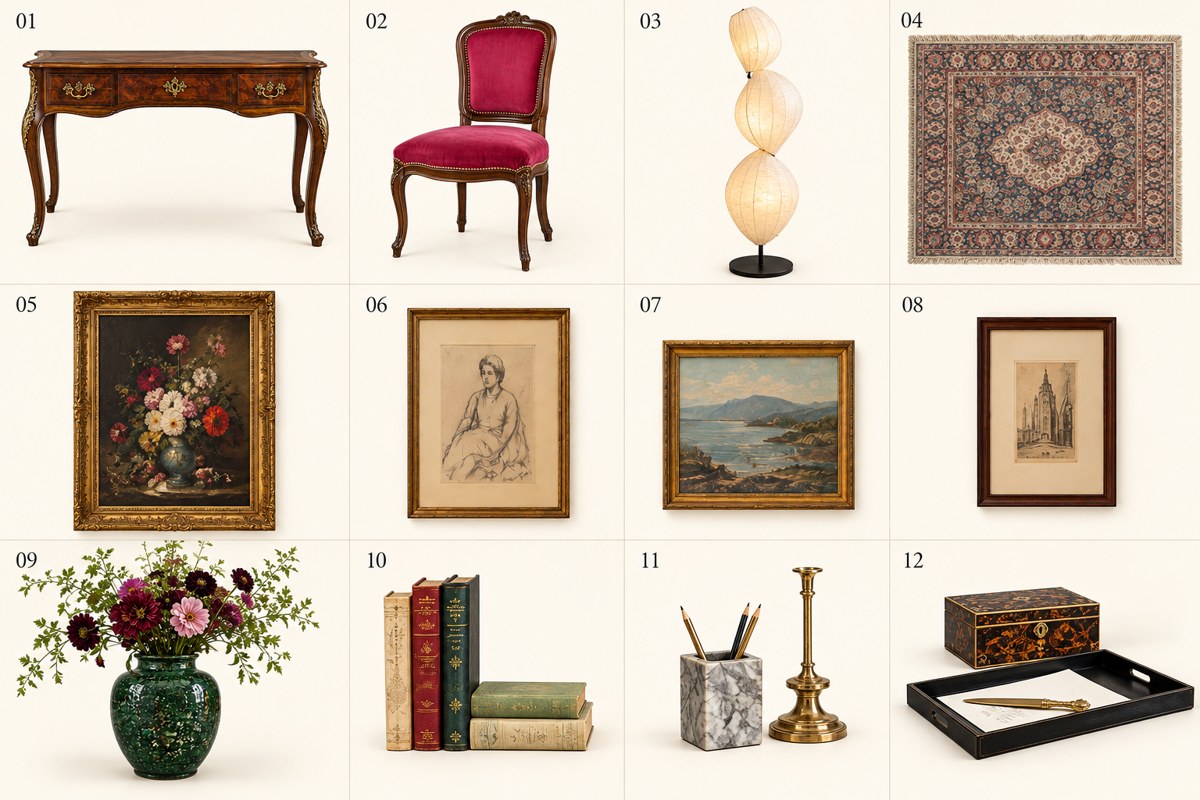
| No. | Piece | What it adds |
|---|---|---|
| 01 | Walnut-style writing desk | Curved legs and brass-tone handles bring classic shape. |
| 02 | Raspberry velvet chair | One rich color makes the desk area feel personal. |
| 03 | Sculptural paper floor lamp | Soft light and an airy shape balance the dark wood. |
| 04 | Vintage-style patterned rug | Blue and faded warm tones connect the room colors. |
| 05 | Large floral artwork | The largest frame gives the gallery wall a starting point. |
| 06 | Framed portrait sketch | A quiet drawing gives the eye a rest. |
| 07 | Small landscape artwork | Soft blue tones echo the wall and rug. |
| 08 | Architectural print | A narrow dark frame adds variety. |
| 09 | Green vase and loose flowers | Uneven stems bring a little movement to the desk. |
| 10 | Books | Different heights add layers without filling the surface. |
| 11 | Pencil cup and brass candlestick | Useful tools and a small metal accent share one group. |
| 12 | Decorative box and writing tray | Small objects stay together instead of spreading out. |
You do not need an exact set. Look for a similar mix of shapes, colors, and textures. A vintage-style desk can work beside a modern paper lamp.
Step 1: Give the Empty Room a Calm Background
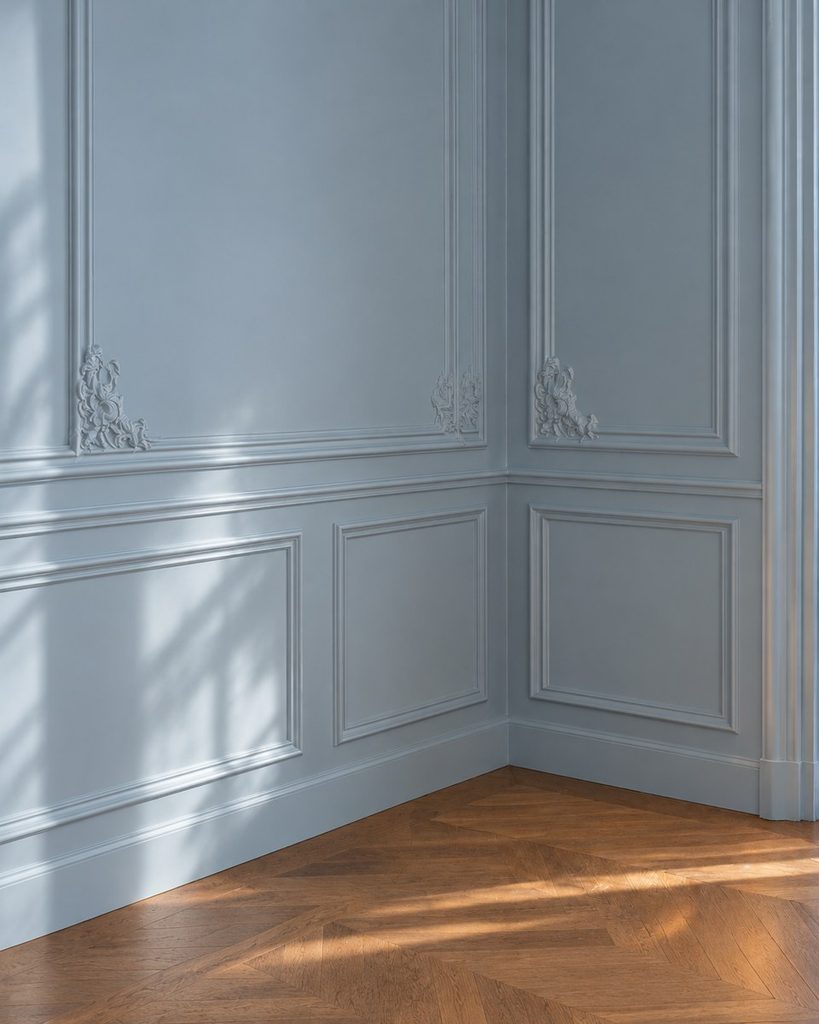
Here, the walls and wood floor are already in place. This guide begins with furnishing the empty corner.
The blue-gray wall sets the mood. It sits quietly behind dark wood, gold-tone frames, and a colorful chair. The wall trim adds detail before anything else arrives.
If your room has plain walls, you can still use this color balance. The furniture does not need ornate walls to work.
Check the space before adding pieces. Think about the desk width, the chair when pulled out, and the path through the room. Also note where a lamp could reach an outlet.
Step 2: Place the Desk, Chair, and Rug
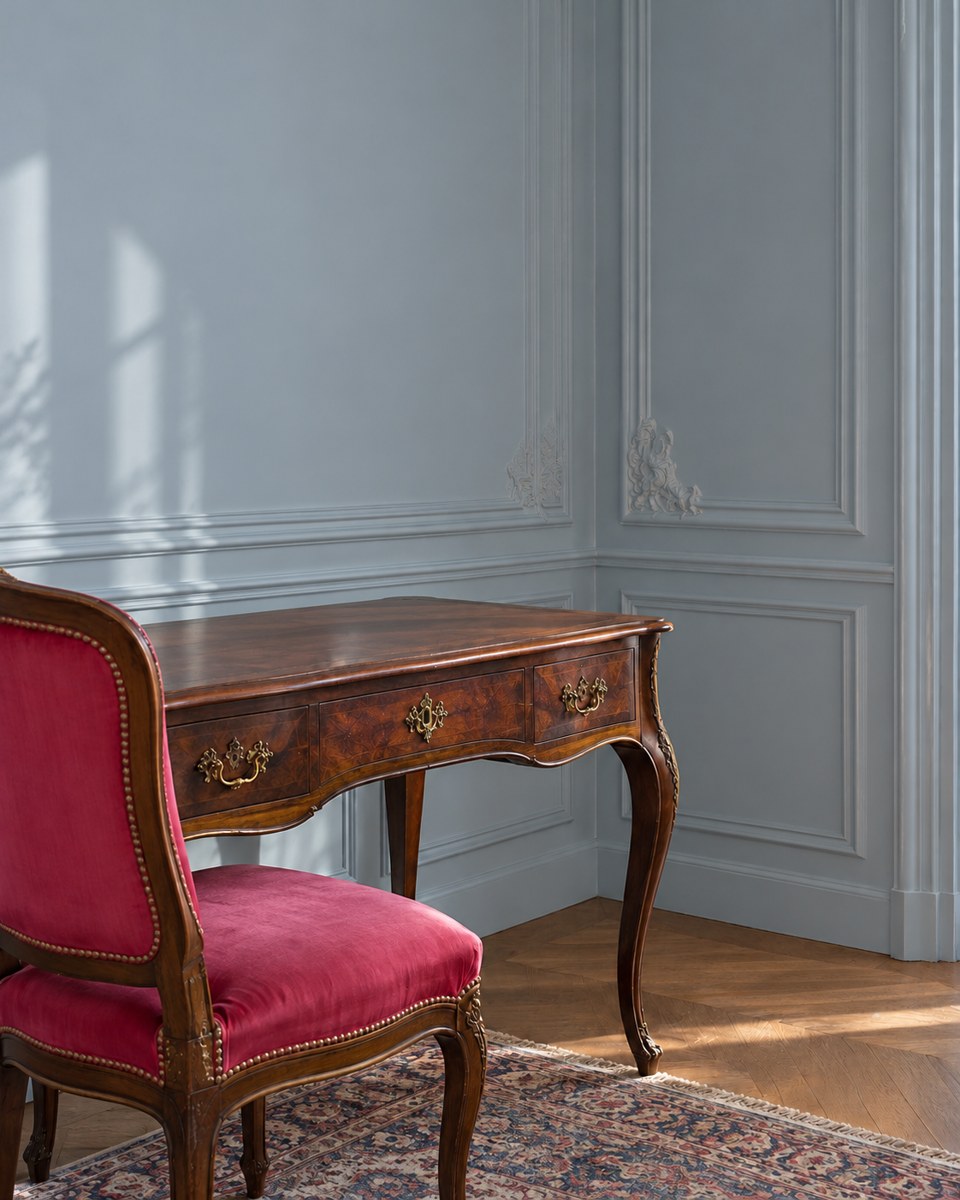
Start with the rug, then the desk and chair: pieces 04, 01, and 02. The desk anchors the corner. Its curved legs keep the dark wood from feeling too heavy.
The raspberry chair is the main color accent. You do not need to repeat this strong color everywhere. The faded tones in the rug are enough to connect it to the room.
- Leave room to pull the chair back.
- Choose a seat that works with the desk height.
- Keep the rug flat where the chair moves.
Pause before adding decorations. Use the desk for a moment. A beautiful writing corner should also feel easy to sit in.
Step 3: Add a Gallery Wall and Soft Light
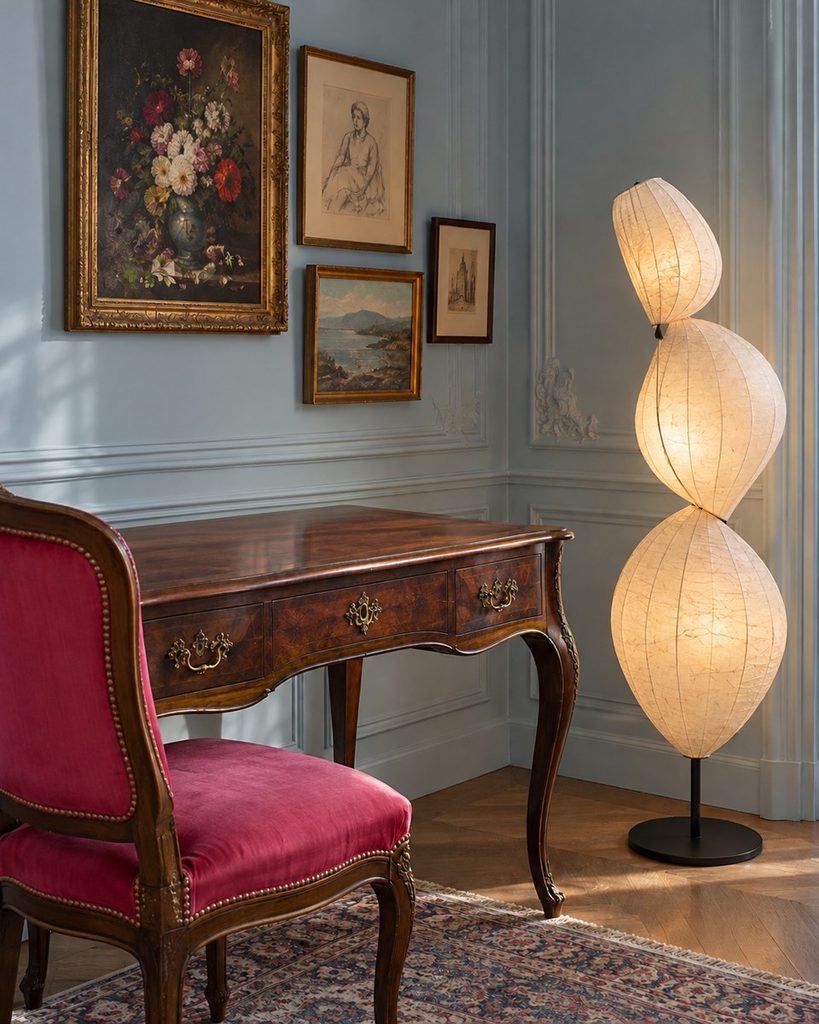
Now add pieces 05–08 and the paper lamp, 03. Start with the largest floral artwork. Arrange the smaller portrait, landscape, and print around it.
The frames do not all match. Gold tones connect several pieces. One darker frame breaks up the group. The subjects also vary, so the wall feels collected over time.
Lay out the frames before hanging them. Leave some blue wall visible between them. Use fixings suited to your wall and each frame’s weight.
The paper lamp brings a different shape beside the desk. Its light feels softer than the shiny wood and metal details. For reading or writing, add task light if the corner needs it. Use a bulb approved for the lamp, and keep paper shades away from heat.
Step 4: Finish with Flowers and Small Desk Objects
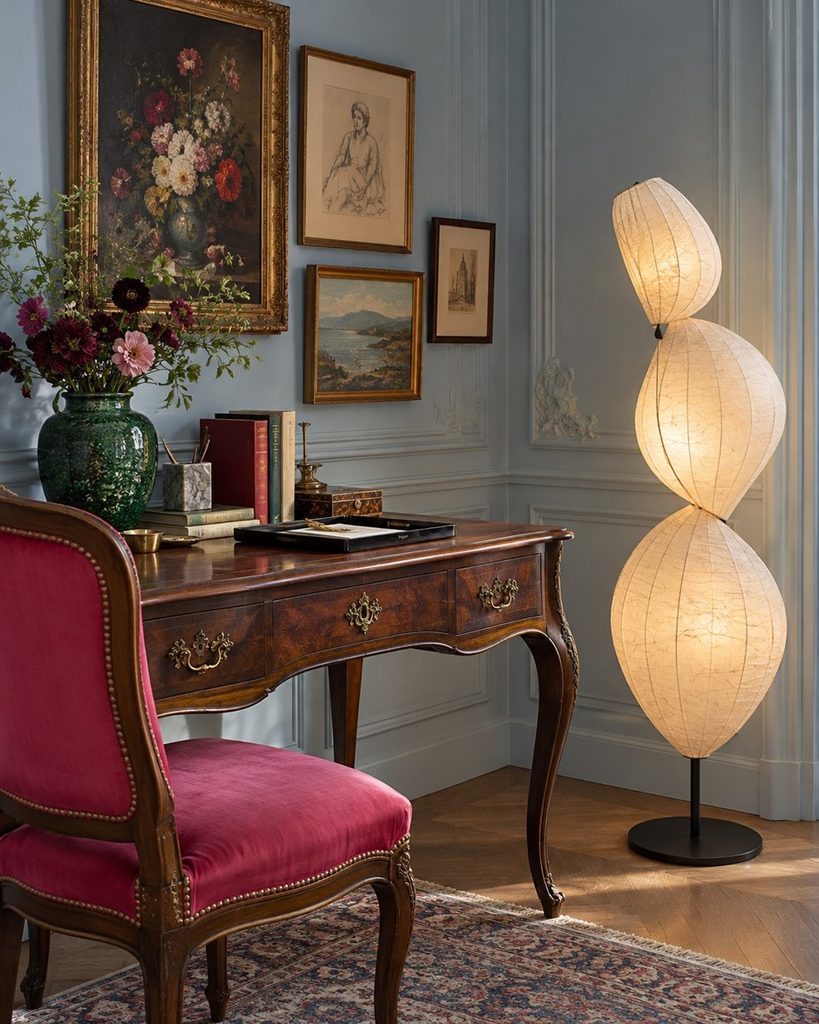
Add the vase, books, pencil cup, candlestick, box, and tray: groups 09–12. Place taller pieces toward the back. Let a few smaller objects sit in front.
The green vase adds another color without competing with the chair. Loose stems soften the straight lines of the frames. Different flower heights feel more relaxed than a perfect dome.
Keep the flowers clear of the paper lamp. Put a waterproof barrier under the vase to protect the wood. The candlestick can stay as an unlit decorative accent.
Use the tray to keep small items together. Leave a clear area for a notebook or letter. Stop while the desk still has space to work.
Keep the Mix, Make It Yours
The room works through contrast: dark wood and light paper, classic frames and a sculptural lamp, quiet blue and rich velvet.
Begin with the pieces you already own. Add one layer at a time. You can build an eclectic home office with character without filling every wall or surface.
コメント