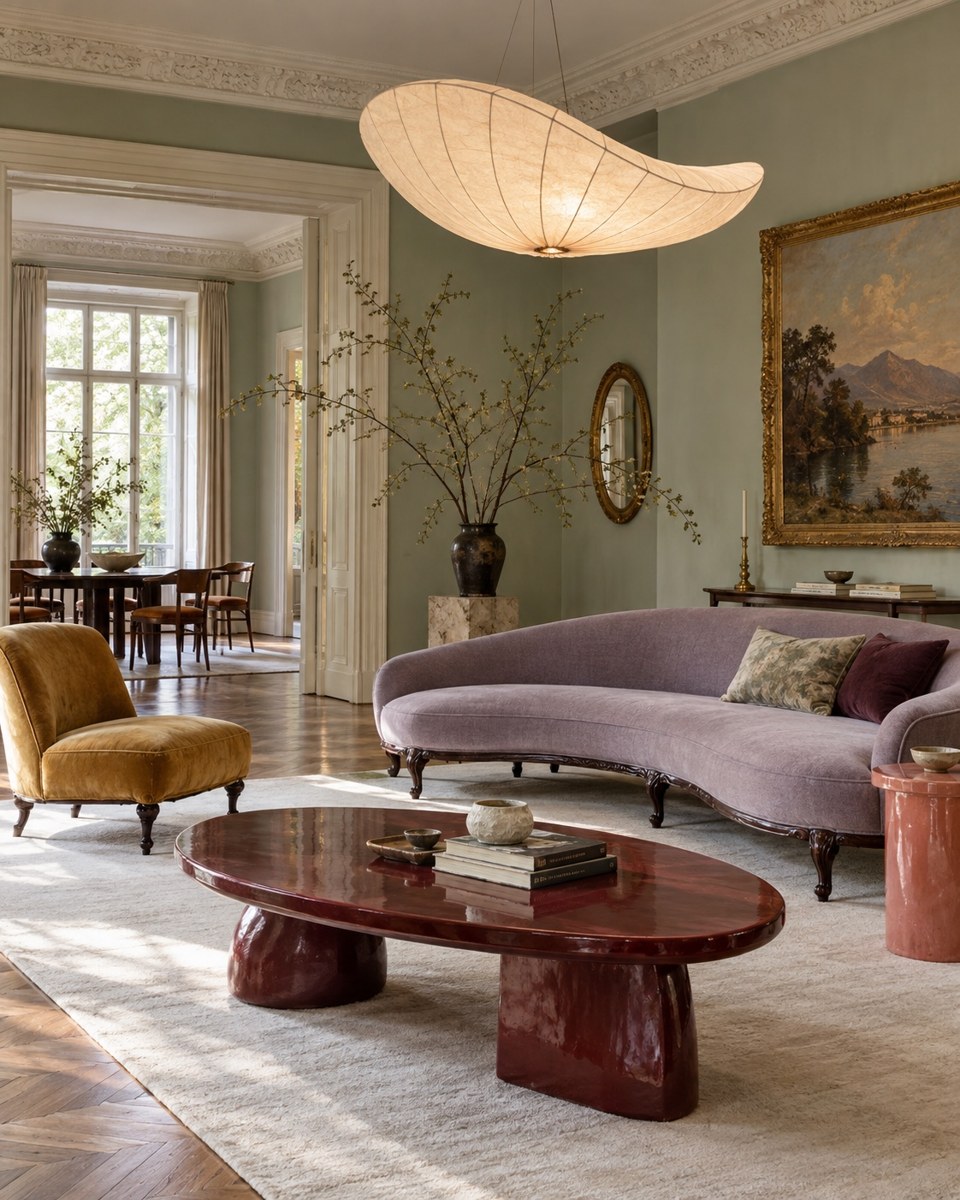
Can a colorful living room still feel quiet? This room shows one way to try it.
Sage green walls sit behind a lavender sofa. A mustard chair adds warmth. A deep burgundy table brings weight. The colors are different, but each has its own place.
The idea is to give every strong piece some quiet space around it. Here is the room, built one layer at a time.
These AI-generated images show a styling concept, not a real renovation. The furniture is a visual reference, not a verified set of products for sale. The guide focuses on the foreground living room.
The Furniture and Decor Field Guide
Start by looking at the main pieces. The numbers match the image. A few small objects share one group.
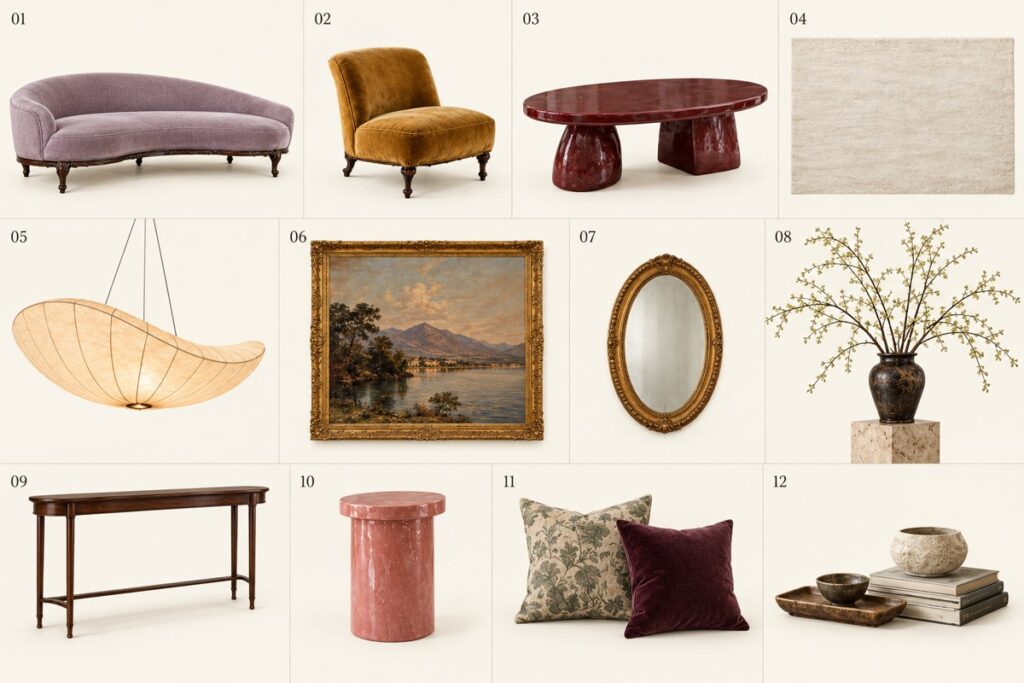
| No. | Piece | What it adds |
|---|---|---|
| 01 | Curved lavender sofa | A soft color and curved outline anchor the seating area. |
| 02 | Mustard velvet chair | A warmer accent keeps the palette from feeling too cool. |
| 03 | Burgundy sculptural coffee table | A deep color and bold shape give the room a focal point. |
| 04 | Ivory rug | A large quiet surface connects the seating pieces. |
| 05 | Sculptural paper pendant | An airy shape balances the heavy table below. |
| 06 | Framed landscape artwork | A classic frame adds detail and a sense of history. |
| 07 | Oval mirror | A small curved accent breaks up the wall. |
| 08 | Branch vase and stone plinth | Loose branches add height without a solid block of color. |
| 09 | Slim wooden console | A narrow surface creates another layer behind the sofa. |
| 10 | Dusty rose side table | A small warm note sits close to the sofa. |
| 11 | Two different cushions | A botanical pattern and a deep plum tone add gentle contrast. |
| 12 | Books, tray and small ceramics | Twelve furniture and decor groups for the living room.Personal details finish the room without filling the table. |
You can use this as a guide to shapes and colors. You do not need the same sofa or table. Look for a similar balance of soft seating, a strong center piece, and lighter details.
Step 1: Start with a Quiet Background
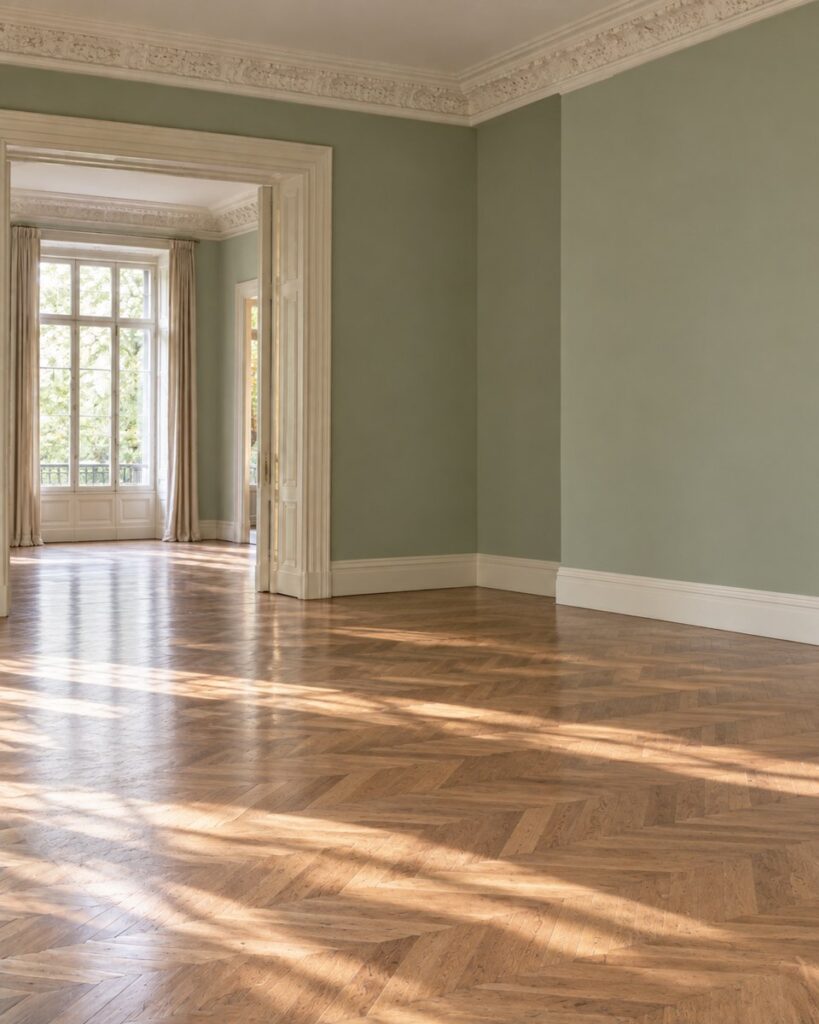
The wall color, trim, floor, and curtains are already in place. We begin with furnishing this empty room.
The sage green walls offer a calm background. Ivory trim and curtains give the room lighter edges. The warm wood floor keeps the green from feeling cold.
Notice the open doorway. It is part of the room’s shape. Keep that route clear as you add furniture.
- Measure the room and the delivery route.
- Leave space to walk between seating and tables.
- Try color samples in your own daylight before choosing a wall color.
Let the background do some of the work. Not every surface needs a pattern or a bright color.
Step 2: Place the Seating and Main Tables
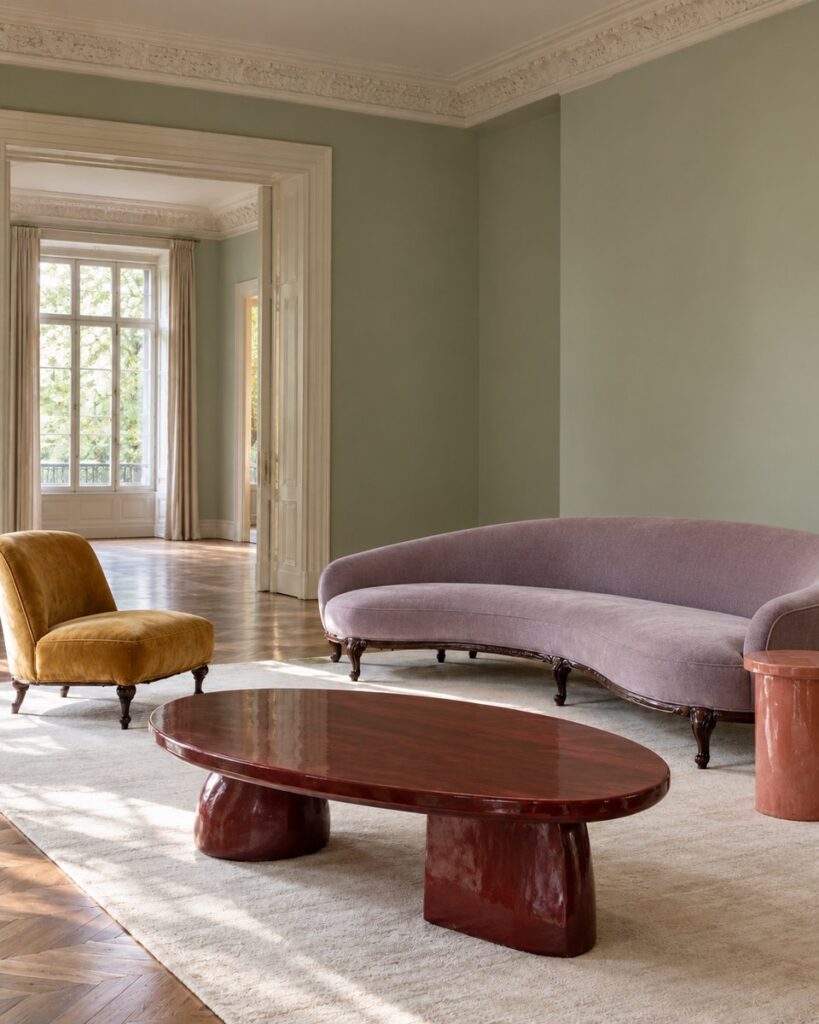
Start with the ivory rug, 04. Then add the lavender sofa, 01, and mustard chair, 02. Turn the chair toward the seating area so the two pieces feel connected.
The burgundy coffee table, 03, is the boldest shape. Its deep tone sits below the lighter sofa. The curve of the top also relates to the curved seating.
The small rose side table, 10, adds a softer warm color at the edge. It does not need a large display on top.
Check the layout before styling it. Sit down. Make sure you can reach the table and stand up easily. Choose real furniture for comfort, stability, and the space you have.
Step 3: Add Light, Art, and a Back Layer
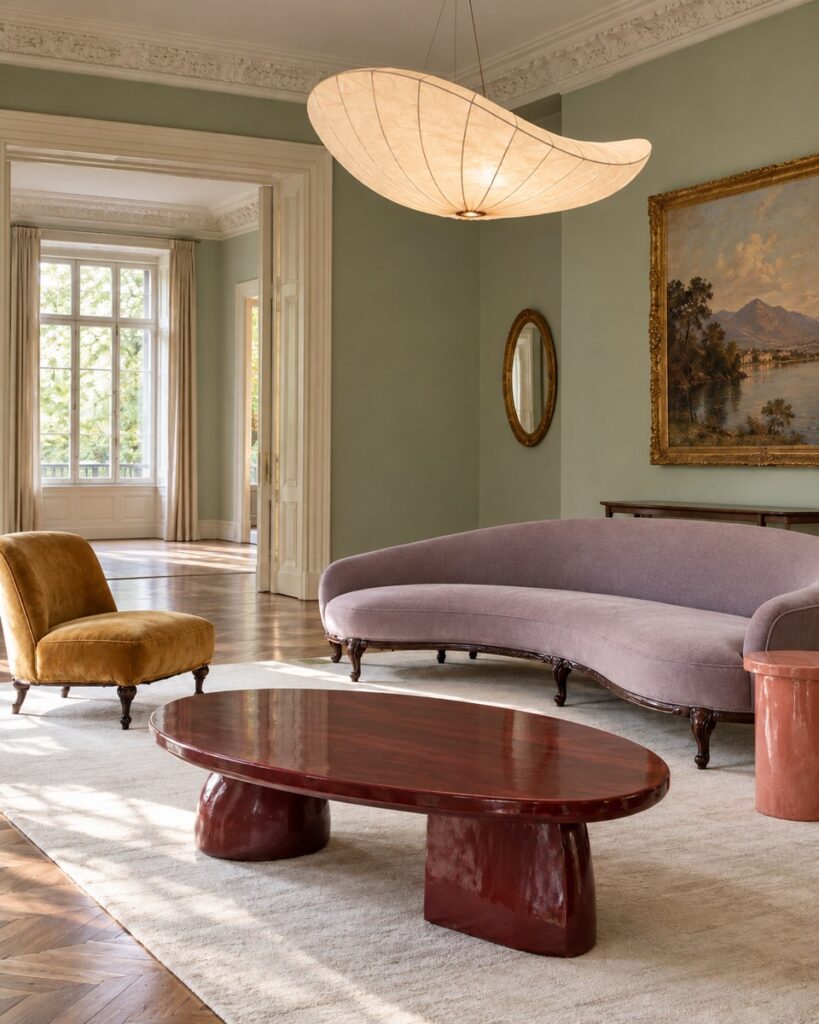
Add the slim console, 09, behind the sofa. It gives the wall a place for a few objects later. Keep it narrow enough to suit the room.
The paper pendant, 05, changes the balance. The coffee table feels solid. The lamp feels light. That difference gives the room interest.
Before choosing a pendant, check its size, ceiling support, and clearance. Use a suitable fixture and bulb. Keep paper shades away from heat, and have fixed wiring handled by a qualified electrician.
The landscape, 06, and oval mirror, 07, add classic detail. There are only two main wall pieces here. The green space between them helps the room stay quiet.
The frames and mirror in the image are style references. They are not identified antiques or named artworks.
Step 4: Bring in Branches and Personal Details
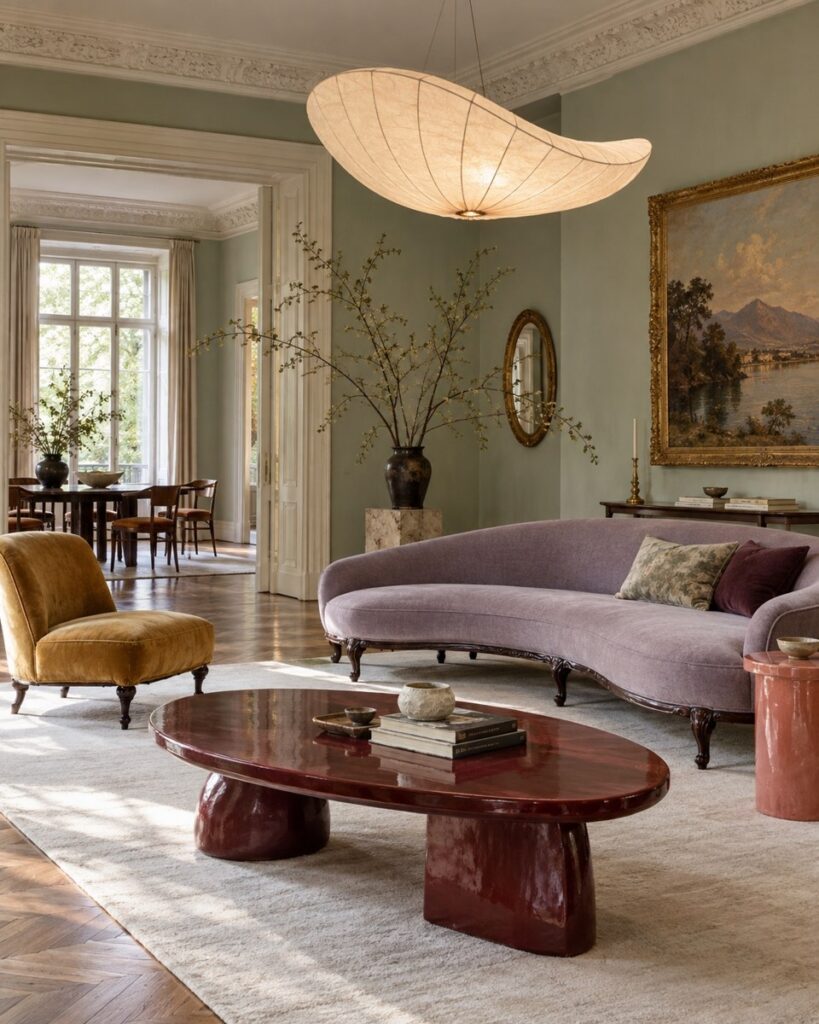
The branch arrangement, 08, adds height near the doorway. Its open outline lets the wall show through. Use fewer stems if your room is smaller.
Choose a stable vase and base. Keep branches clear of the lamp and walking route. Protect the stone or wood below from water.
Add the cushions, 11. One has a soft botanical pattern. The other brings a little deeper plum. They connect to the room without turning every seat into a display.
Finish with the books and ceramics, 12. Place a short book stack and a small vessel together. Keep the tray close by. Leave most of the coffee table open.
A small candlestick and a few objects on the console complete the back layer. The dining furniture beyond the doorway belongs to the adjoining room. It is not needed to finish this seating area.
Keep the Color, Leave Some Space
Lavender, mustard, burgundy, and sage can share a room without having the same strength. Here, the wall is quiet, the sofa is soft, and the table is bold.
Start with one main color and one contrasting piece. Add the smaller details slowly. A colorful living room can feel collected and calm at the same time.
コメント