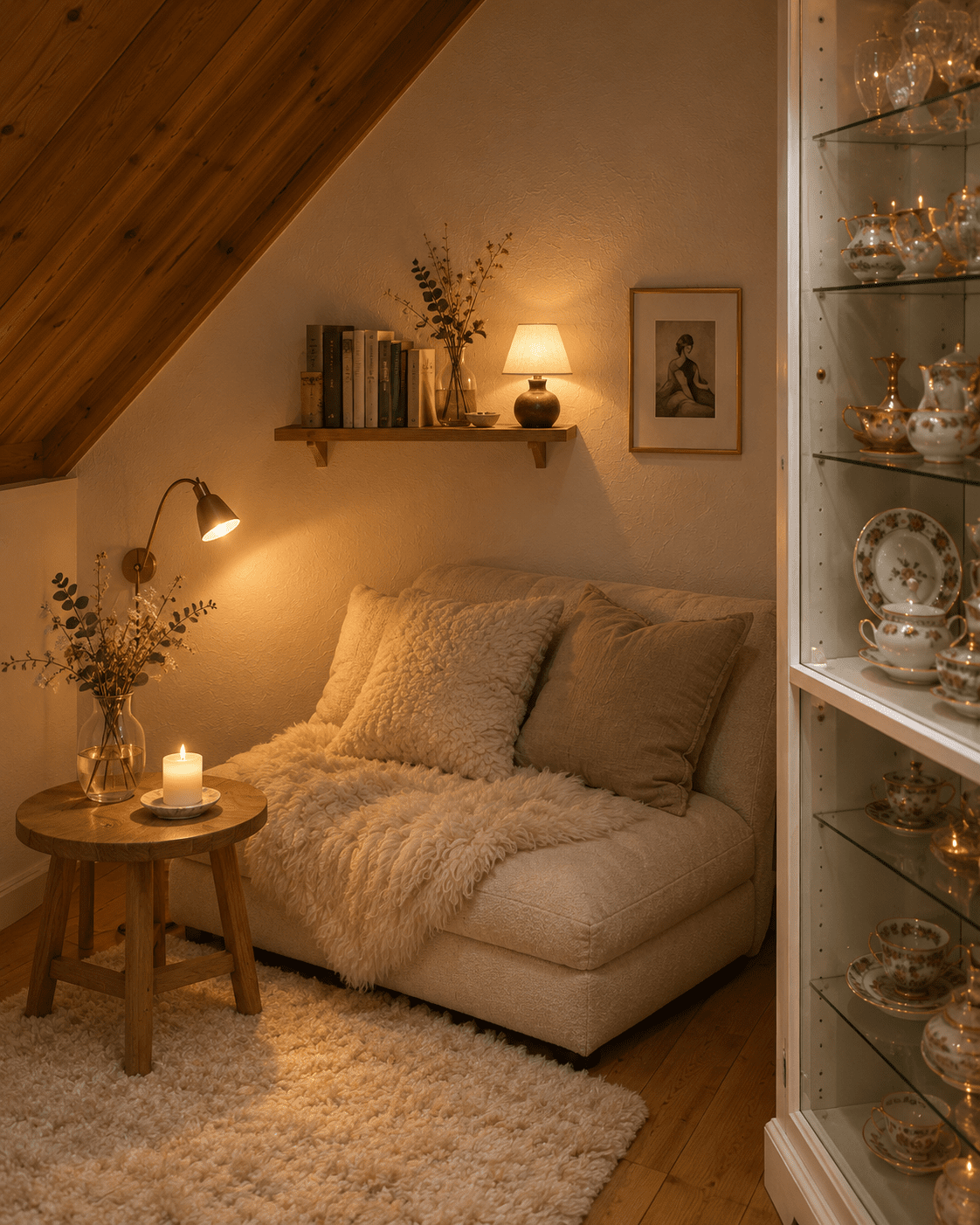
A Quiet Reading Corner Beneath the Sloped Ceiling
Warm wood overhead, a small pool of light, and a seat tucked into the corner. This is how I imagine turning an overlooked part of my home into a place to slow down with a book.
This image was created using generative AI based on photos of my own home. It shows an interior concept, rather than a completed renovation. The furniture and decorative objects are illustrative.
Let the room shape the idea
The sloped wooden ceiling gives this corner its character. Instead of trying to disguise it, I wanted the seating to sit comfortably beneath it, with the warmth of the timber still visible above.
A low, compact seat keeps the arrangement in proportion. A small side table brings a book and a cup within reach. The glass-fronted cabinet at the edge of the scene adds a different texture: reflections, delicate china, and a little ornament beside the softer fabrics.
That contrast is part of the atmosphere I want for my home—quiet enough to rest in, with details worth looking at.
Give the light somewhere to fall
In this concept, the lighting is concentrated around the seat rather than spread evenly across every surface. A small shaded lamp lights the books on the shelf, while a separate reading light reaches toward the chair.
The surrounding shadows let the wood, fabric, and glass take on different depths. There is a gentle shift from the brighter reading area to the quieter edges of the room.
For an actual arrangement, I would choose the reading light for its usefulness first: enough light on the page, with the bulb kept out of my direct line of sight. The softer decorative light would come second.
Bring together materials with different voices
The palette stays close to warm wood, ivory, and muted brown, but the surfaces do different things. Wood holds the structure of the room. Woven fabric softens the seat. Glass catches small reflections. The porcelain adds fine lines and a touch of history.
I would also like to introduce stone in a modest way—a small dish or a naturally shaped piece on the side table. Something cool and weighty beside the textiles, without filling every available surface.
For me, the feeling of a small private gallery comes from these relationships: the shape of an object, the space around it, and the way the light reveals its surface.
Leave room for everyday use
The shelf holds a few books and a lamp. A small framed picture gives the wall a point of interest. The side table still has space for the things someone would actually put down while reading.
In a real room, I would start with the seat and check the walking space before adding the smaller objects. A throw can soften the corner, but the table needs a stable surface and the reading light needs to reach the page.
The arrangement should be comfortable to use as well as pleasant to look at.
A corner that can change over time
This is one possible version of the room. Another picture, a different textile, or a single stone object could change its expression while keeping the same warmth and stillness.
That is what I want to explore here: different ways of living with the structure of my own home, shaped by art, materials, and quiet light.
A place for a book—and a little time to stay with it.


コメント