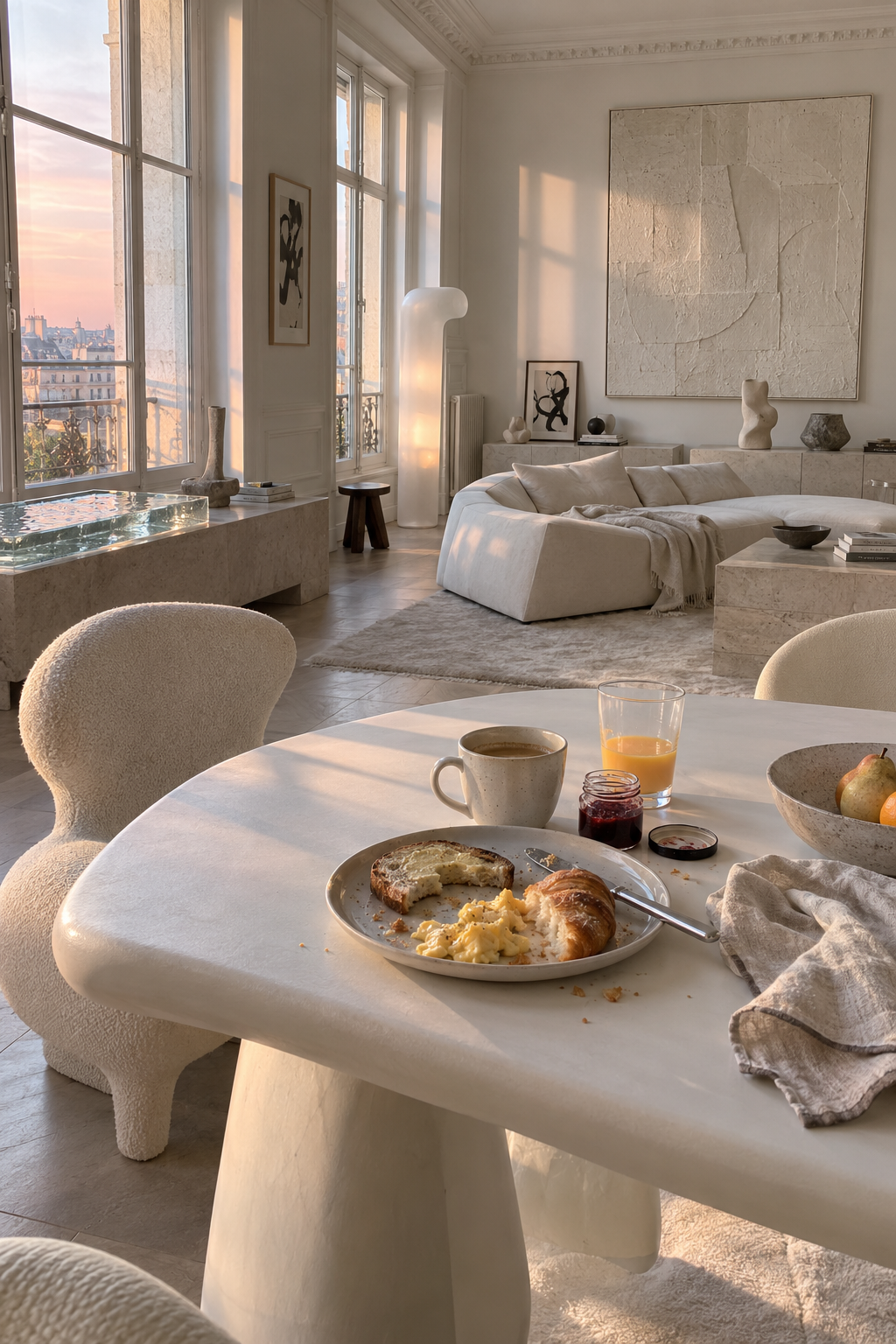
A pale room can hold plenty of detail. Here, a rounded dining table, a low sofa, textured surfaces, and a little reflected light create two connected places to sit. The colors stay close; the shapes do the work.
AI-generated interior concept and suggested styling sequence.
The pieces in this room
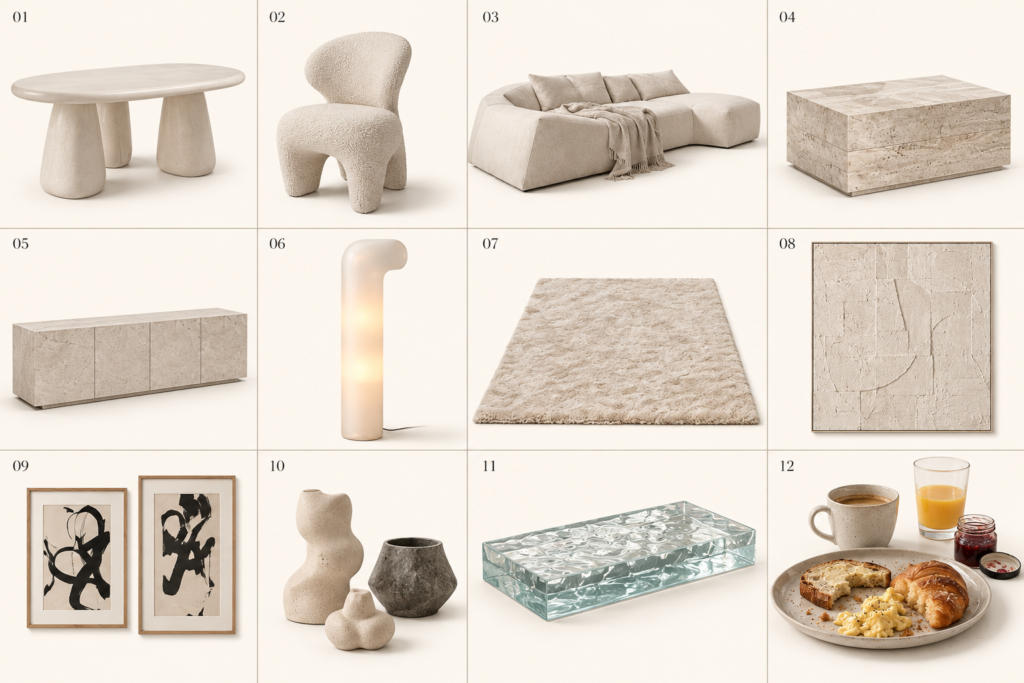
| No. | Piece | What it adds |
|---|---|---|
| 01 | Sculptural dining table | The broad pale top and tapered legs give the foreground a strong, rounded shape. |
| 02 | Boucle dining chair | The nubby upholstery adds texture beside the smoother table. |
| 03 | Low cream sofa | A low, softly curved sofa defines the sitting area without a tall back. |
| 04 | Stone-look coffee table | A solid rectangular block contrasts with the curved seating. |
| 05 | Low stone-look cabinets | Long pale storage connects the window side with the rear wall. |
| 06 | Sculptural floor lamp | A tall curved lamp brings a warm glow into the space beside the window. |
| 07 | Cream textured rug | A pale, uneven surface softens the floor around the sofa. |
| 08 | Textured wall artwork | Raised marks bring shadow and depth to the large pale wall. |
| 09 | Black abstract prints | Small black gestures introduce a sharper accent within the neutral palette. |
| 10 | Ceramic sculptures | Irregular vessels and sculptural forms repeat the furniture’s rounded outlines. |
| 11 | Glass water tray | A shallow reflective feature introduces clear edges and rippling light. |
| 12 | Breakfast tableware | A ceramic plate, mug, glass, and linen give the dining table an everyday scale. |
These are visual references rather than identified products.
1. Begin with an empty room
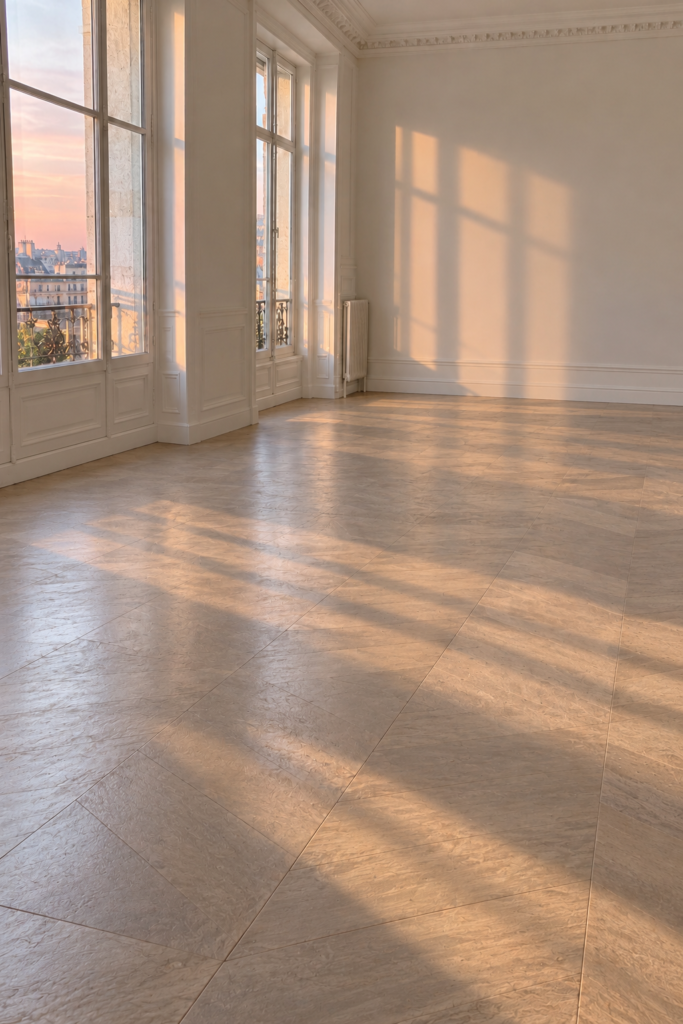
Keep the windows, wall details, and floor visible before deciding where things belong. Plan the dining area near the foreground and the lower sitting area behind it, with a route between them.
2. Place the main furniture
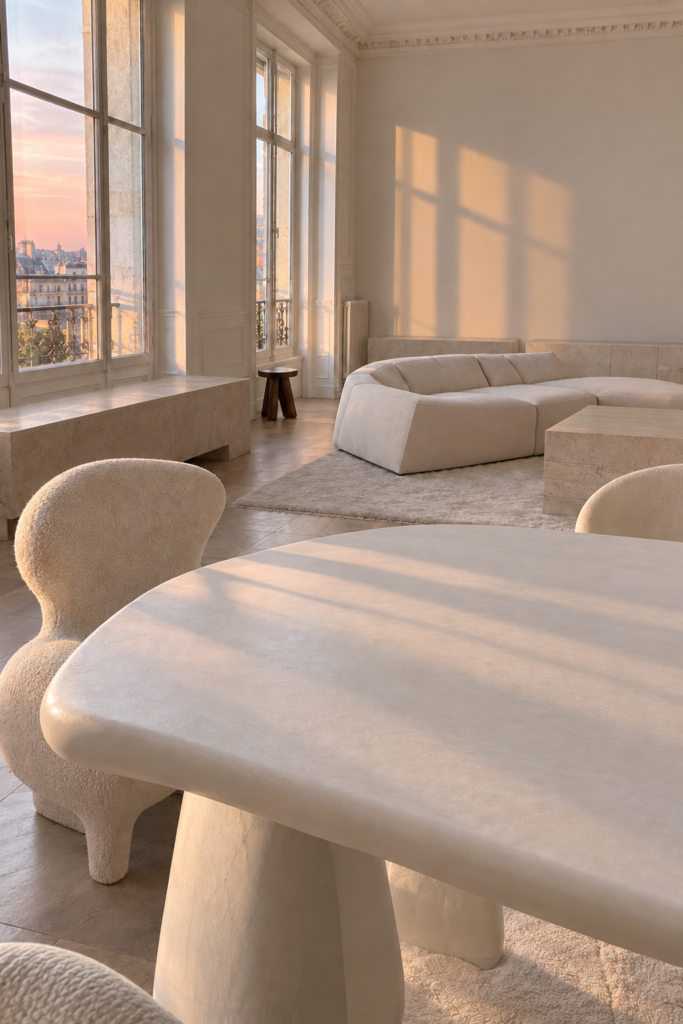
Place the dining table and chairs first, then the sofa, rugs, and block coffee table. Keep the low cabinets at the window and along the rear wall. Repeating pale colors lets the curved and rectangular shapes sit together. Leave enough space to pull out the dining chairs.
3. Add art, light, and soft layers
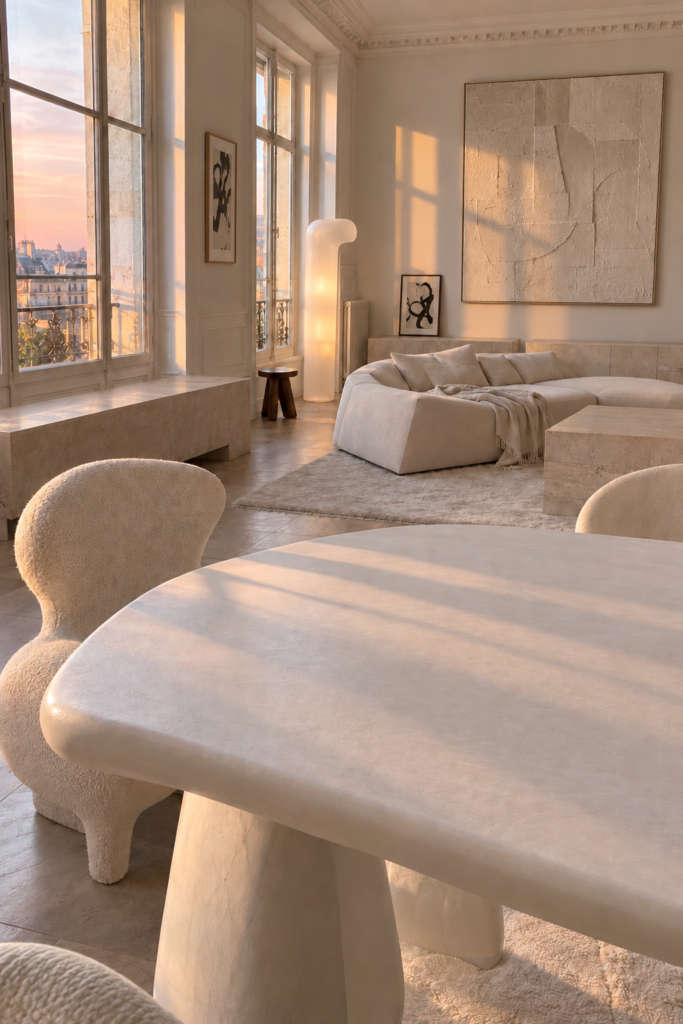
Hang the large textured artwork above the rear storage and add the smaller black prints. Bring in the sculptural lamp, loose cushions, and a draped throw. The change comes from shadow, height, and surface texture rather than a new color scheme.
4. Finish the surfaces
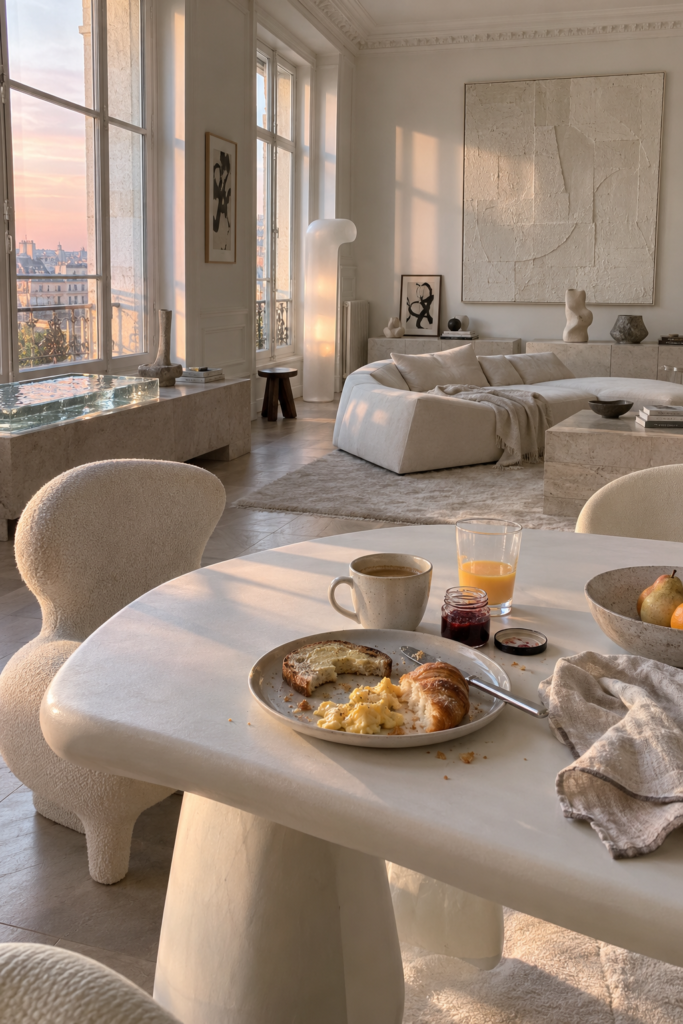
Add a few ceramic forms and books to the cabinets, then the glass water feature by the window. Finish the dining table with a plate, mug, juice glass, jam, and loosely folded linen. The food and small objects make the large forms feel lived with. Keep some surface space open.
You do not need every piece to be white. The connection comes from related pale tones, repeated curves, and a few surfaces that catch the light differently.
コメント