A Small Attic Study Filled with Japanese Books
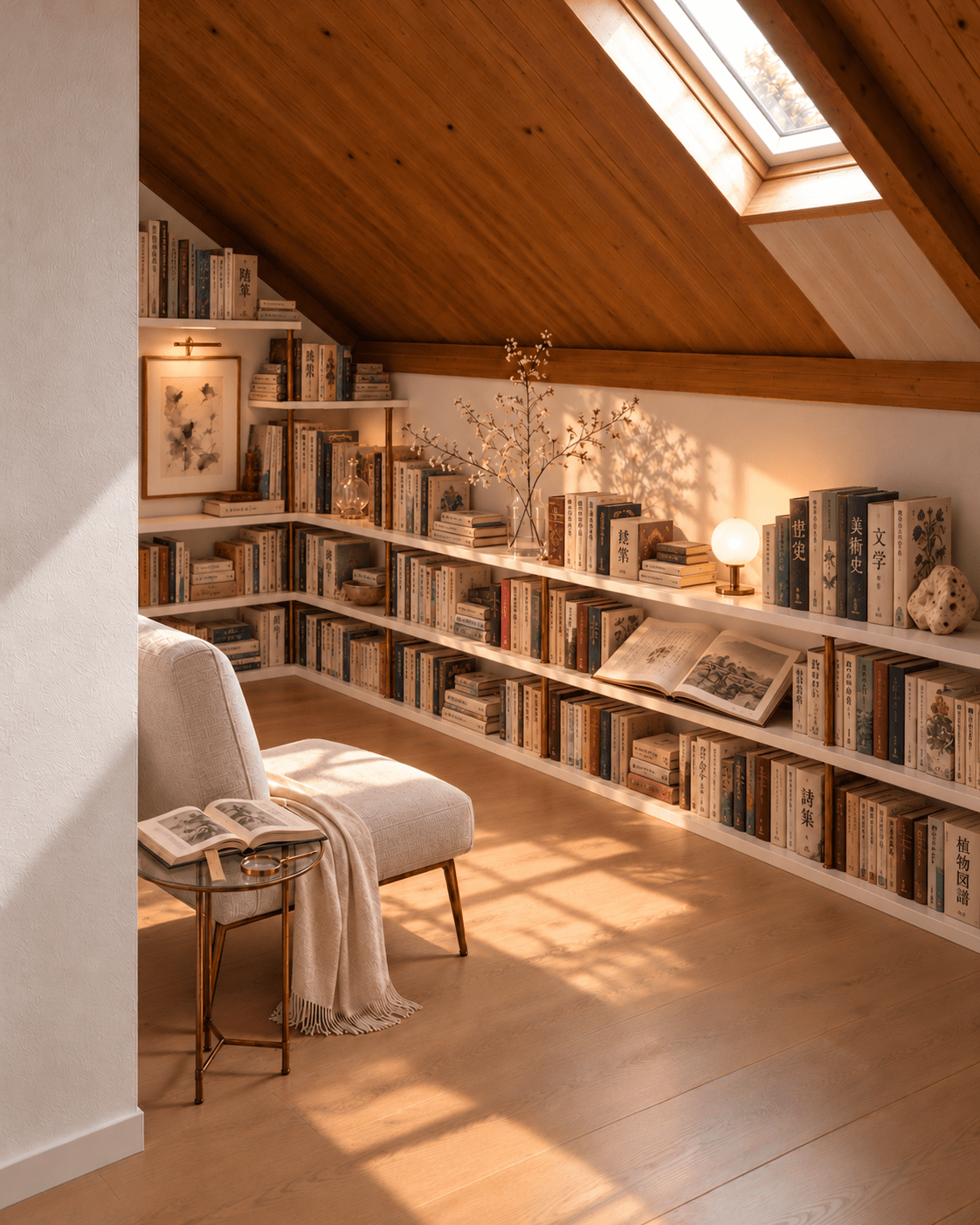
A sloped wooden ceiling, shelves of Japanese books, and a quiet place to sit in the afternoon light. For this version of my home, I imagined a small study where the books feel collected over time, rather than chosen to match the furniture.
The image in this article was created using generative AI based on photos of my own home. It presents a styling concept, not a completed renovation or a photograph of furniture and books I own.
Starting with the room I already have
The wooden ceiling and roof window set the character of this space. They are the starting point for the concept, rather than details to replace with a different kind of room.
I imagined bookshelves wrapping around the alcove: low shelves beneath the roof, with a stepped arrangement on the end wall. The floor remains open enough for a small reading seat, so the corner feels like somewhere to spend time—not simply somewhere to store books.
For a real installation, the shelf supports, spans, and fixings would need to be designed for the weight of the books. This image explores the appearance and arrangement, rather than providing a construction plan.
Books with different histories
The books are what give this version its particular mood. Small Japanese paperbacks sit beside taller literary volumes, art books, and illustrated reference books. Their heights, thicknesses, and bindings vary.
Vertical lettering gives the spines a fine graphic rhythm. Pale paper jackets bring lightness; faded blue, muted green, and darker covers interrupt the cream without turning the shelves into a colour display. A few horizontal stacks break up the upright rows.
I wanted the suggestion of a personal collection: books gathered through different interests and different years. The aged paper and varied covers bring an antique feeling without making every volume look like the same leather-bound edition.
A full bookshelf can still feel delicate
With so much warm timber overhead, another large surface of heavy wooden cabinetry would change the balance of the room. In this concept, pale shelves and slender brass supports let the books remain the richer, more detailed part of the scene.
The white wall is still visible behind them. A few gaps give a glass vessel or a small piece of stone room to stand on its own, while most of the shelf space belongs to the books.
That is the balance I was looking for: a book-filled study, with enough lightness around the collection to notice its smaller details.
Light, glass, and the shadow of a branch
The roof window brings daylight across the pale chair and floor. A small globe lamp adds a softer local glow, while a picture light draws attention to the framed work at the end of the shelves.
A fine flowering branch introduces a different kind of line beside the straight shelf edges and book spines. Its shadow reaches across the wall; the transparent vase catches the light without becoming another solid block in the arrangement.
These details are modest, but they give the room something to look at beyond the books themselves.
A place to open a book
The reading seat is simple: pale upholstery, a lightly draped textile, and a small glass-topped table within reach. An open book and a brass magnifying glass suggest how the corner might be used.
I like the contrast between the collected feeling of the shelves and the quietness of this seat. The room can hold many interests, while the place to sit remains uncomplicated.
This is the kind of study I wanted to imagine within my own home—Japanese books, warm timber, delicate glass, and light that leaves space for shadows.


コメント